Tide
“In battle, momentum means riding on the force of the tide of events.” — Sun Tzu
Situational Dice Resolution
Section titled “Situational Dice Resolution”Before a shared bar exists, each action still stands alone. Primitive, unopposed, and opposed rolls use the same Marks reading. The Tide is what you open when the collective contest is larger than a clean 1v1.
| Mode | When | Reading |
|---|---|---|
| Primitive | Animal-tier action | Foundation-only pool; Marks give incremental benefit; no Practice |
| Unopposed | No opposing character | Full pool; Marks give incremental benefit |
| Opposed | Wills collide (1v1 or many actors) | Full pools (pairs need not match); each action is resolved individually; compare Marks difference on the reply chain |
| Tide | Larger than clean 1v1 as a collective contest | Individual opposed resolutions also move a shared tracker |
Hints:
- Opposed rolls are handled as replies to a prior roll so automation can compute margins.
- In a 1vMany or ManyvMany mess, each action still stands alone. Advantage and Disadvantage are read from that action’s context — not averaged across the field.
- Treat intent and context when reading the margin: conditions, injuries, insight — all valid Storyteller levers.
- Social, mental, and physical contests use the same resolution shape.
- Armour, reputation, favours, numbers, and terrain are context for Advantage / Disadvantage and for interpreting the margin — not separate subsystems — except where Harm uses armour or Reputation protection ratios (not both on the same event; the Storyteller picks the contest type).
When many wills push at once — a column under harassment, a hall-wide debate — those individual opposed readings are not enough. That is the Tide.
The Tide
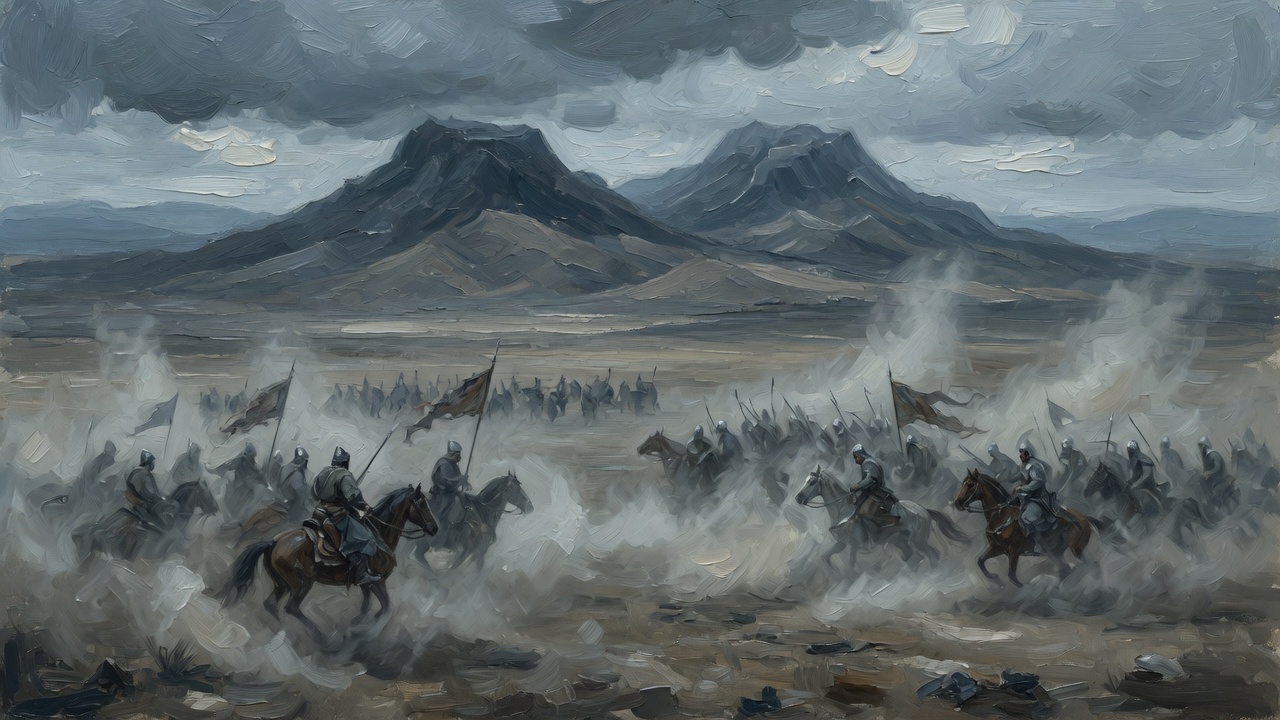
Section titled “The Tide”The Tide is a shared pressure track for a whole side when the contest is larger than a clean 1v1 — a skirmish, a running fight, a hall-wide debate, a pursuit, a column under harassment.
It is not a second character sheet and not the same as personal Advantage on one roll. Individual actions still resolve on their own. Some of those actions are Tide-linked: their Marks margin (and sometimes Omen) nudge a single marker on one shared bar. When the marker hits an end, that collective side routes. People can still stand, flee, die, or complete a personal objective in the rout.
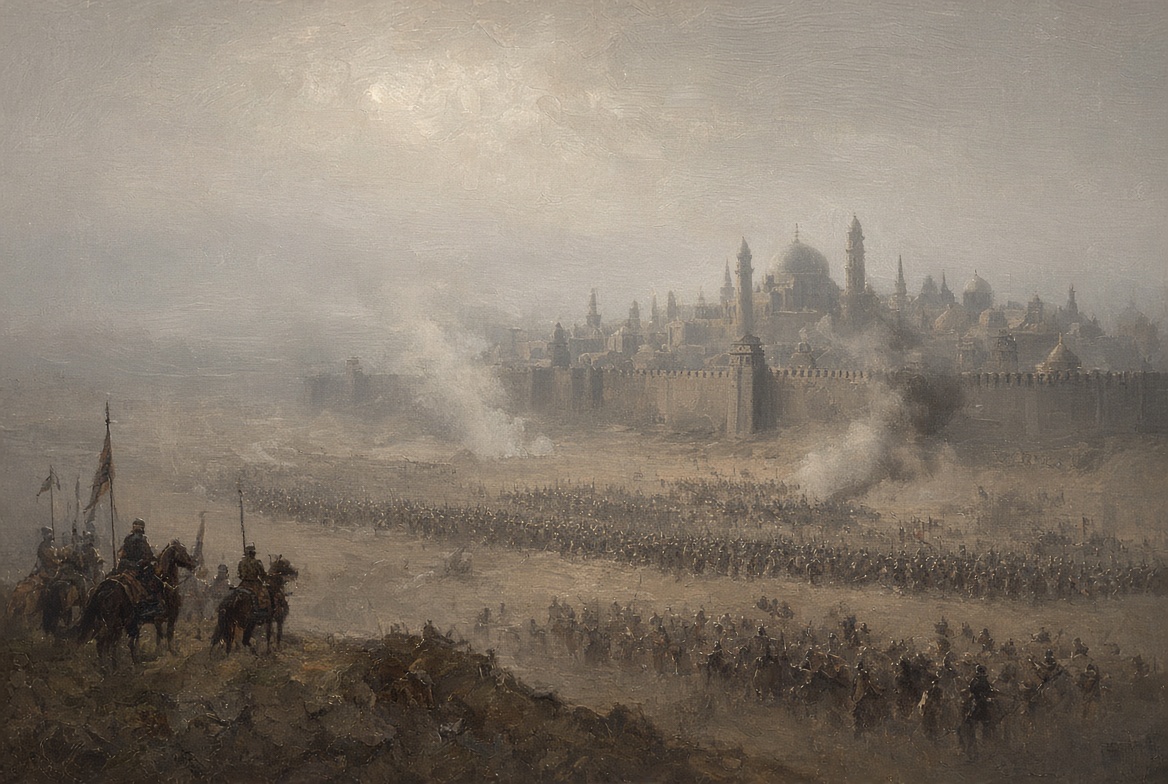
Both sides share one track. The Storyteller assigns each side a soft weight (numbers, ground, morale, who holds the better footing as a force — not a sum of Foundation scores).
| Term | Meaning |
|---|---|
| Weight | Soft ST read of each side’s collective footing (higher = stronger as a force) |
| Track length | weight_A + weight_B − 1 — how long the bar is |
| Start | At weight_A counted from side A’s collapse end — A begins farther from collapse if heavier |
| Skirmish size | How hard the bar is to move: Marks of difference needed per step (separate from track length) |
| Situation | Weights (A vs B) | Track length | Start (from A’s end) |
|---|---|---|---|
| Equal footing | 8 vs 8 | 15 | 8 |
| Slight advantage (A) | 8 vs 6 | 13 | 8 |
| A clearly superior | 8 vs 12 | 19 | 8 |
| A severe disadvantage | 6 vs 12 | 17 | 6 |
(The last row starts at 6 because side A’s weight is 6 — they begin closer to collapse.)
The Zhao/Wei column later in this chapter uses the last row. Imperial 6, Mongol 12, track 17, marker opens at 6 — already closer to collapse.
Imperial
weight 6
Mongol
weight 12
Crimson is imperial footing. It already looks thin. That is the setup — no one has rolled yet.
There are three sizes. There is no larger scale than Battle.
| Size | Marks difference per Tide step |
|---|---|
| Small skirmish | 1 |
| Skirmish | 2 |
| Battle | 3 |
Shifting by Marks
Section titled “Shifting by Marks”On a Tide-linked opposed exchange, take the Marks difference (margin). Steps moved = floor(margin ÷ Marks needed). Direction: toward the winner of that exchange.
A roll that is not Tide-linked (a local fight, an extraction, a personal objective) does not move the bar.
On the imperial road: Zhao’s first order is Tide-linked — the pursuit would open the line — and the bar moves 6 → 5. His later stand at the wash is personal. The bar stays at 2.
Tide-linked — Zhao stops the chase
floor(4 ÷ 3) = 1 step against the column. The collective bar moves.
Personal — Zhao holds the wash
He is forced back a horse-length. The column’s bar does not care.
Omens on the Tide
Section titled “Omens on the Tide”Omens on Tide-linked actions also move the marker. Direction depends on which end of the track a face pushes toward. Marks and Omen are independent — the same roll can step the bar from the margin and from an Omen face.
Zhao’s last cut, boxed in at the wash: margin 4 → one step (2 → 1). Omen 1 is also Tide-negative for the column (severe Battle band 1–3) → another step (1 → 0). Two motions, one throw.
On equal footing:
| Size | Faces toward A collapse | Faces toward B collapse |
|---|---|---|
| Small skirmish | 1 | 20 |
| Skirmish | 1–2 | 19–20 |
| Battle | 1–3 | 18–20 |
Imbalance — the same ladder as die tiers
Section titled “Imbalance — the same ladder as die tiers”Personal Advantage on a single roll is still judged case by case. Collective imbalance is different: it changes which Omen faces push the shared bar.
Treat collective footing as the die-tier ladder:
- Equal — both sides ordinary
- Slight — one step (
d8vsd12, ord6vsd8) - Severe — two steps (
d6vsd12)
Procedure. The side under pressure keeps its bad band at the current skirmish size. Its good band is taken from N sizes smaller on the equal-footing table (slight N=1, severe N=2).
There is no size below Small skirmish. A good band cannot shrink below one face.
Interactive example — two PCs on the imperial road
Section titled “Interactive example — two PCs on the imperial road”| Zhao (PC) | Mounted sergeant of the outriders |
| Wei (PC) | Bodyguard of the Emperor |
| Tide | Imperial weight 6 · Mongol weight 12 · track 17 · start 6 · Battle (3 Marks per step) |
| Colours | Crimson imperial footing · Teal Mongol pressure |
| Tide Omens | Against column 1–3 · for column 20 only (severe imbalance, Battle) |
| Scene faces | 4 = ambush in the left dry wash (scene only) · 13 = Negative Consequence · 1 = ring closes, surrender (also Tide-negative) |
Only people roll. When a roll is Tide-linked, its Marks margin (and sometimes Omen) moves the bar. Step through.
Routing
Section titled “Routing”When the Tide reaches one end, that collective side routes. Morale breaks. The group crumbles or flees. Individuals may still stand, refuse, die heroically or foolishly, complete a personal objective, or take a major setback — the Tide breaks collective will, not personal agency.
Related: Dice Mechanics, Marks & Tiers, Omens, Harm.